What Are Regenerative Signaling Factors? A Physician's Explanation
Regenerative signaling factors are an acellular concentrate of 300+ proteins and growth factors — no cells, no DNA. What is in the vial and how it is used.
Regen MDs Clinical Team//7 min read
The short version
Regenerative signaling factors are the message, not the messenger. Ultra RSF (Regenerative Signaling Factors) concentrates 300+ proteins and growth factors drawn from all six regions of the placenta.
The preparation is acellular — no living cells, no DNA, no RNA. That is a statement about what is in the vial, not a claim about what it achieves.
The signals are understood to act on tissue organisation, barrier integrity and immune balance: the conditions repair needs, rather than repair itself.
It is administered by a physician inside a directed plan, alongside your existing care, and is never supplied as a standalone product.
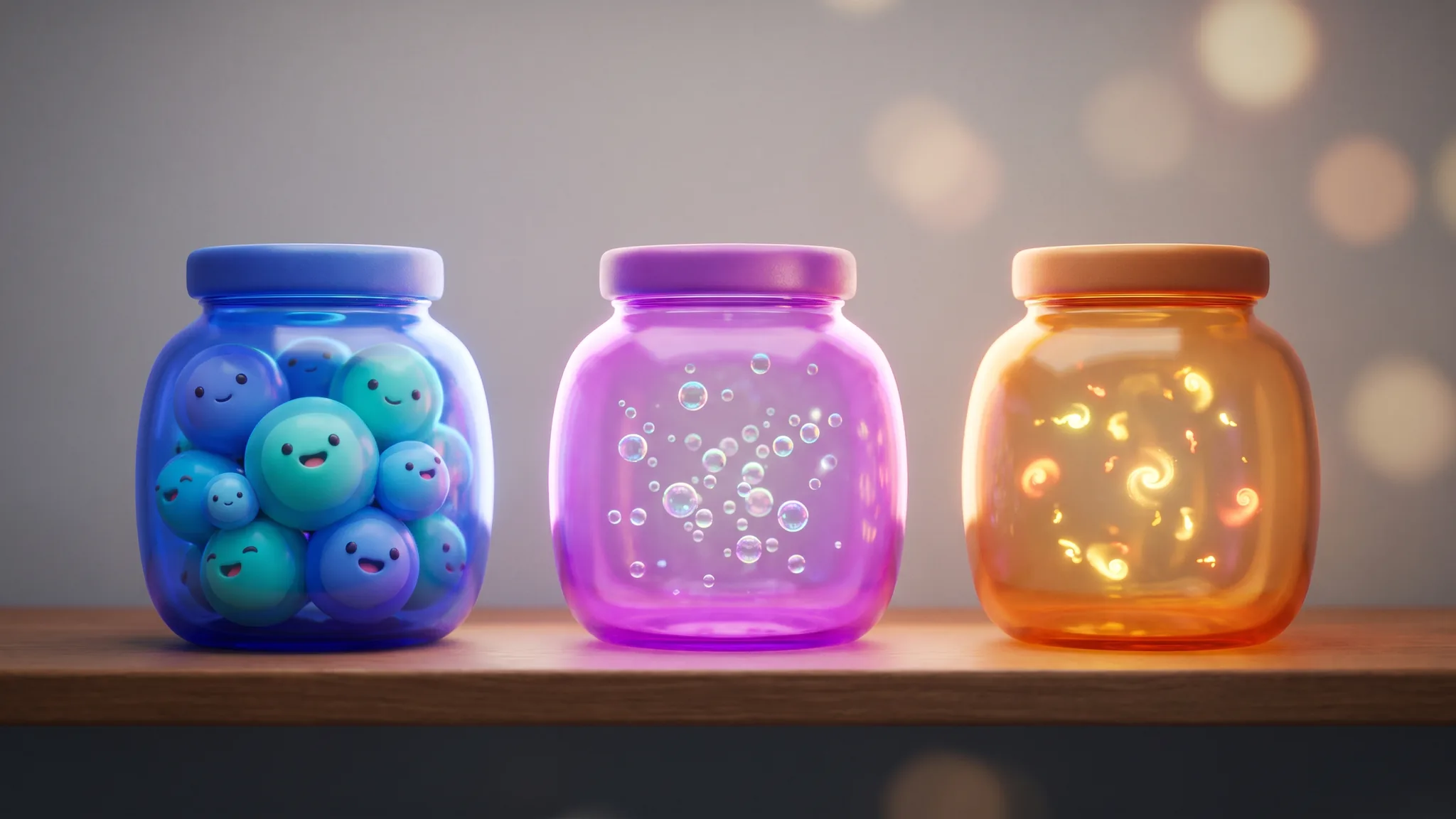
For most of the time stem cells have been discussed in clinic waiting rooms, the assumption has been that the cells do the work. Place living cells where tissue is damaged, and they settle in, become the missing tissue, and rebuild it from the inside. It is an intuitive picture. It is also an incomplete one.
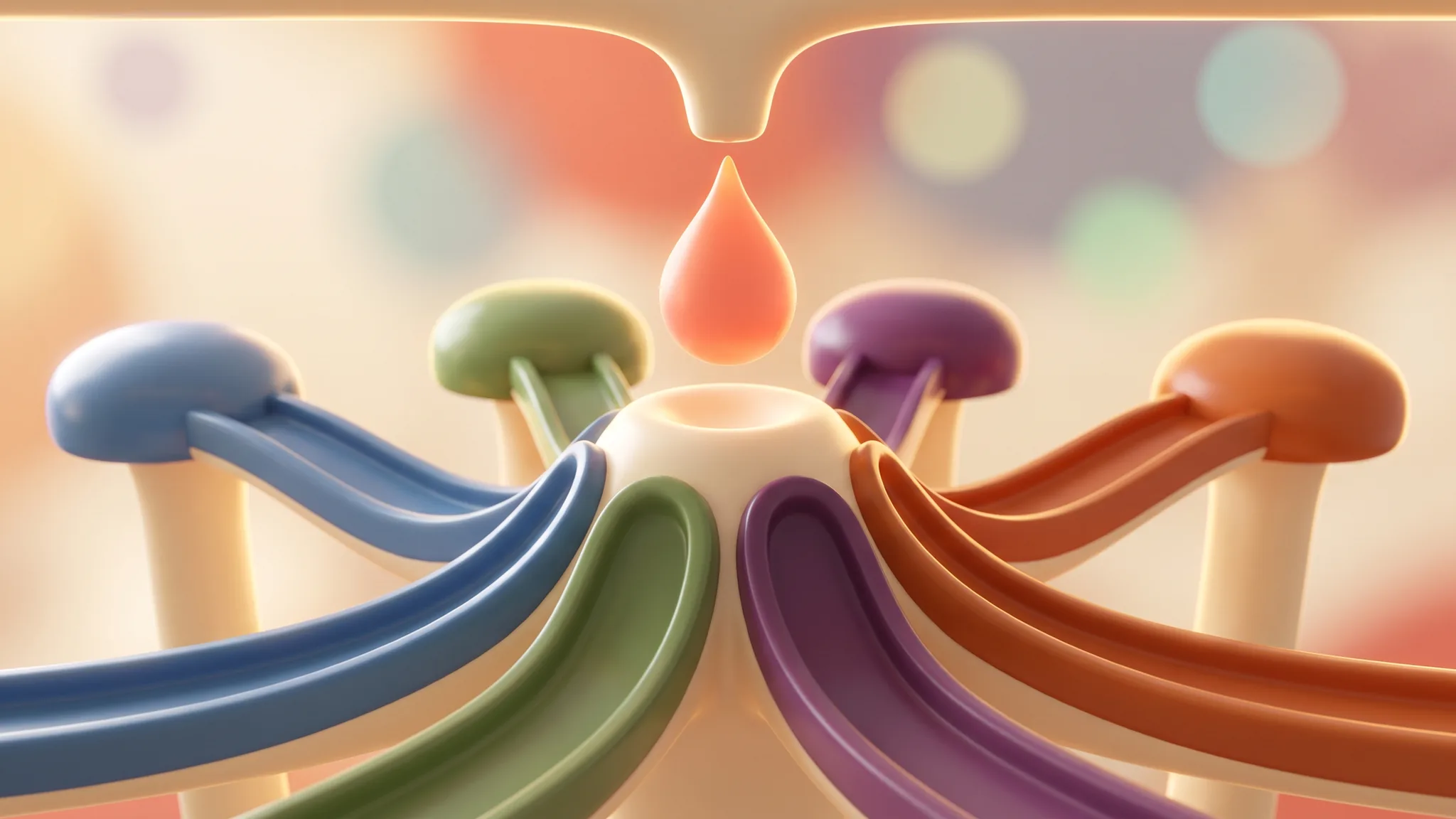
A great deal of the interest in regenerative medicine has since moved toward what those cells secrete rather than the cells themselves. Cells communicate constantly, releasing proteins and growth factors that tell the tissue around them what to do next: when to lay down matrix, when to let inflammation resolve, when to seal a barrier. Regenerative signaling factors are that vocabulary, collected and concentrated with the cells left out.
What follows is an account of what is in the vial, why the signal turned out to be the part worth isolating, and what is and is not being claimed when a physician uses it. There are no outcome promises anywhere in this article, and the reason for that is set out plainly further down.
The signal is the part being delivered
Ultra RSF (Regenerative Signaling Factors) is a concentrate of more than 300 proteins and growth factors. Nothing in it is alive. Nothing in it divides, engrafts, or turns into tissue. What it carries is instruction — the chemical messages cells in a healing environment ordinarily release.
That is a narrower proposition than the one stem-cell marketing tends to make, and deliberately so. A signal cannot rebuild a joint on its own. What signalling molecules are understood to do is influence the behavior of the cells already present: which proteins those cells build, how they arrange what they build, whether they stay inflamed or stand down. Any repair that follows is still your own tissue's work. The treatment page sets out where this sits in a plan.
Acellular, and what that word is carrying
Acellular means what it sounds like. The material is purified until every living cell has been removed, and what remains is free of DNA and RNA. There is no donor cell line in the vial, nothing capable of engrafting, and no genetic material to account for.
The practical consequences matter more than the word suggests. Live-cell preparations vary from donor to donor and demand an unbroken cold chain from the laboratory to the arm. An acellular protein concentrate can be freeze-dried, shipped and stored without refrigeration, then reconstituted with 1 mL of sterile water at the point of use. That is a large part of why it can be given in a patient's home in another state rather than only in a laboratory-adjacent clinic. The full sequence is in how Ultra RSF is made.
Why six placental regions rather than one
The proteins are drawn from all six regions of the placenta: the decidua, the villous placenta, umbilical cord blood, Wharton's jelly, the amnion and the chorion. Most preparations in this category, stem-cell and exosome products alike, begin from a single tissue — usually Wharton's jelly or cord blood.
Each region has a different job across a pregnancy, so each carries a different signalling vocabulary: immune tolerance and implantation from one, exchange and growth-factor transfer from another, structural matrix cues from a third. Drawing from all six widens the range of signals present in the concentrate. That is a claim about the breadth of the input and nothing more. It is not a promise of a better result, and anyone presenting it as one has overreached. Each region is taken in turn in the six-region breakdown.
What tissue is understood to do with the instructions
Signalling molecules do not act on one thing at a time. They are described in the literature as working across several processes at once, which is why the framing here stays at the level of process rather than disease. Three areas come up repeatedly.
Tissue organisation. The balance of collagen I and III, and the integrity of the basement membrane underneath it. New tissue is not the same thing as well-organised tissue, and that difference is what decides whether function is durable.
Barrier integrity. Tighter junctions and better sealing in skin and mucosa. A barrier that leaks keeps re-provoking the immune system sitting next to it, which is one reason inflammation idles instead of finishing.
Immune balance. Less overheat, more resolve. Inflammation is meant to be a phase rather than a setting, and the interest here is in helping it complete rather than in switching it off.
None of those three is a disease name. Describing mechanism at that level is honest. Extending it into a list of conditions a vial fixes is not, and it is precisely where most regenerative-medicine marketing goes wrong.
Why the language here stays at the level of mechanism
Everything above is hedged: understood to, associated with, described as. That is not throat-clearing. Signalling biology is well characterised at the level of what molecules do to cells, and much less well characterised at the level of what a vial does to a person with a named condition. Those two things are routinely presented as though they were the same thing.
The manufacturers in this field publish figures we do not reproduce, none of which arrive with a citation attached. Our position is that composition, sourcing, screening and handling can be verified and will be described in as much detail as anyone wants, and that anything past that line is a claim we have not earned. Whether a clinic is willing to draw the line at all is worth noticing, which is one of the questions worth asking before you commit to anyone.
A figure that arrives without a citation is copy, not evidence.
How it is given, and by whom
Ultra RSF is administered by a physician, inside a plan written after an evaluation. Four routes exist — intravenously as a push or as an infusion in roughly 100 mL of saline, into a specific joint, subcutaneously, or intranasally. Which is appropriate depends entirely on what is being addressed, because a single inflamed knee and a diffuse inflammatory picture are not the same problem. The routes are compared in more detail here.
It is not sold as a standalone product and it is not something to order online. Nor does it replace anything you are currently taking. Care at Regen MDs is adjunctive: it runs alongside guideline-based treatment, with notes shared back to your own physicians, and any decision to change a prescribed medication belongs to the clinician who prescribed it.
What are regenerative signaling factors?
They are the proteins and growth factors that cells release to instruct the tissue around them. Ultra RSF concentrates more than 300 of them from six regions of the placenta, with no cells, DNA or RNA present.
Are regenerative signaling factors the same as stem cells?
No. Stem cells are living cells carrying donor DNA. Regenerative signaling factors are acellular, meaning the cells have been removed and only the secreted proteins and growth factors remain.
What does acellular mean?
It means the preparation contains no living cells at all. For Ultra RSF it also means the material is free of DNA and RNA, which is confirmed as part of how each batch is characterised.
Can I buy Ultra RSF without seeing a physician?
No. It is administered by a physician as part of a directed treatment plan and is never supplied as a standalone product. Treat any seller offering it without an evaluation with caution.
Does Ultra RSF replace my current medication?
No. Regenerative care at Regen MDs is adjunctive and complements your guideline-based medical care. Stay on your prescribed treatment and discuss any change with the clinician who prescribed it.
This article is general health information, not medical advice, and does not create a physician–patient relationship. It describes mechanisms reported in the literature rather than guaranteed outcomes; individual response varies. Regen MDs provides you an alternative to your current care, and is complementary to your guideline-based medical care. Ultra RSF (Regenerative Signaling Factors) is not a stem-cell therapy. It is an acellular, non-biologic protein preparation — no cells, no DNA and no RNA. Talk to a licensed clinician before starting, stopping, or changing any treatment.